AP Calculus Exam Changes: CED and MCQ
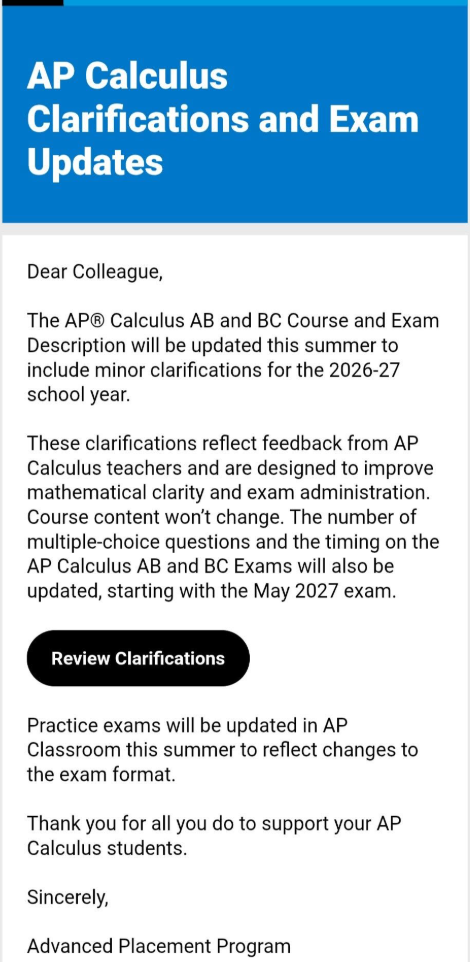
CHANGES ARE COMING to the CED (course exam and description) and MCQ (multiple choice questions), and I think this is just the beginning of a larger overhaul of changes…
Last year, AP Calculus already went through a relatively abrupt change when the exam was turned into a hybrid administration as opposed to just paper, which it had always been. This change was not supposed to happen for a couple more years, but the rampant cheating and illegal early distribution of paper exams forced CollegeBoard to act sooner.
I had already heard very recently about the big changes coming to AP Statistics effective next year, and AP Physics somehow always seems like it’s changing in various ways. However, AP Calculus has been relatively shielded from the sweeping overhauls in the past decade. The calculator policy has changed with the inclusion of Desmos graphing calculator on the hybrid exam last year, but the number of questions in the calculator active and non-calculator sections has been the same for a decade, as have the style and types of questions.
Now, however, AP Calculus, Pre-Calculus, Statistics, and Physics are all switching to 42 Multiple Choice Questions (MCQ) for next year but with a different pacing for each exam. This could be part of CollegeBoard’s desire to standardize the writing process or the scoring process for their AP exams.
This seemingly unexpected announcement came seemingly out of the blue just last week. I’m sure there were many people, including AP consultants and question writers in the exam-writing world, who had heard rumblings of this already. I think that for the majority of us teachers, though, this was a surprise.
Now to be clear, this wasn’t the first time CollegeBoard modified their MCQ section during my 11 years as an AP teacher.
When I first began teaching AP Calculus in 2015, this was the set-up:
45 multiple choice questions
28 questions - no calculator - 55 minutes
17 questions - calculator active - 50 minutes
In 2016, CollegeBoard increased the amount of non-calculator MCQ, and until now, this has been the set-up:
45 multiple choice questions
30 questions - no calculator - 60 minutes
15 questions - calculator active - 45 minutes
I heard a rumor that CollegeBoard changed it to 30 MCQ and 15 MCQ because they were easier numbers to work with so the exam proctors made fewer timing errors with nice round intervals of time like 60 minutes and 45 minutes. Who knows if this is actually true, but I think it also has to do with the decades-long trend of slowly decreasing the amount of the AP Calculus exam that allows the use of graphing calculators. Now that Desmos is allowed, it must be even more difficult to create challenging, unique MCQ that allow and even require technology but also require the students to really use Calculus reasoning and not just rely on the Desmos graph to give an obvious answer. This reminds me of how the SAT math section, which began allowing Desmos on it years ago, just changed the SAT exam in some way to either limit the amount of Desmos use or just change the types of questions, because my students had been telling me for the past few years how all they did was practice Desmos skills and didn’t even really need much mathematical work to solve the problems.
Beginning next year, this is CollegeBoard’s new plan for the exam set-up:

This might seem like a very trivial change, but to only have 13 calculator active MCQ seems almost pointless, especially considering that typically less than half of these require the use of a calculator. Often times they can be solved without needing any technology. It makes me wonder if CollegeBoard will completely eliminate the calculator active MCQ, which would be a shame because I have seem some really high-quality, challenging calculator active MCQ over the years.
One thing I do appreciate is how students now have a BIT more than two minutes per non-calculator MCQ. I cannot tell you how many times I say per year, “Now remember, you have ON AVERAGE just two minutes per multiple choice!” and we spend a significant amount of the year preparing to work at that fast pace. On the other hand, my students always had WAY too much time on the non-calculator MCQ: three minutes per problem on average was way too much time in my opinion. They could have used all this extra time on the non-calculator portion. It’s interesting how even with this change, they basically maintained the ‘three minutes per calculator active MCQ.’
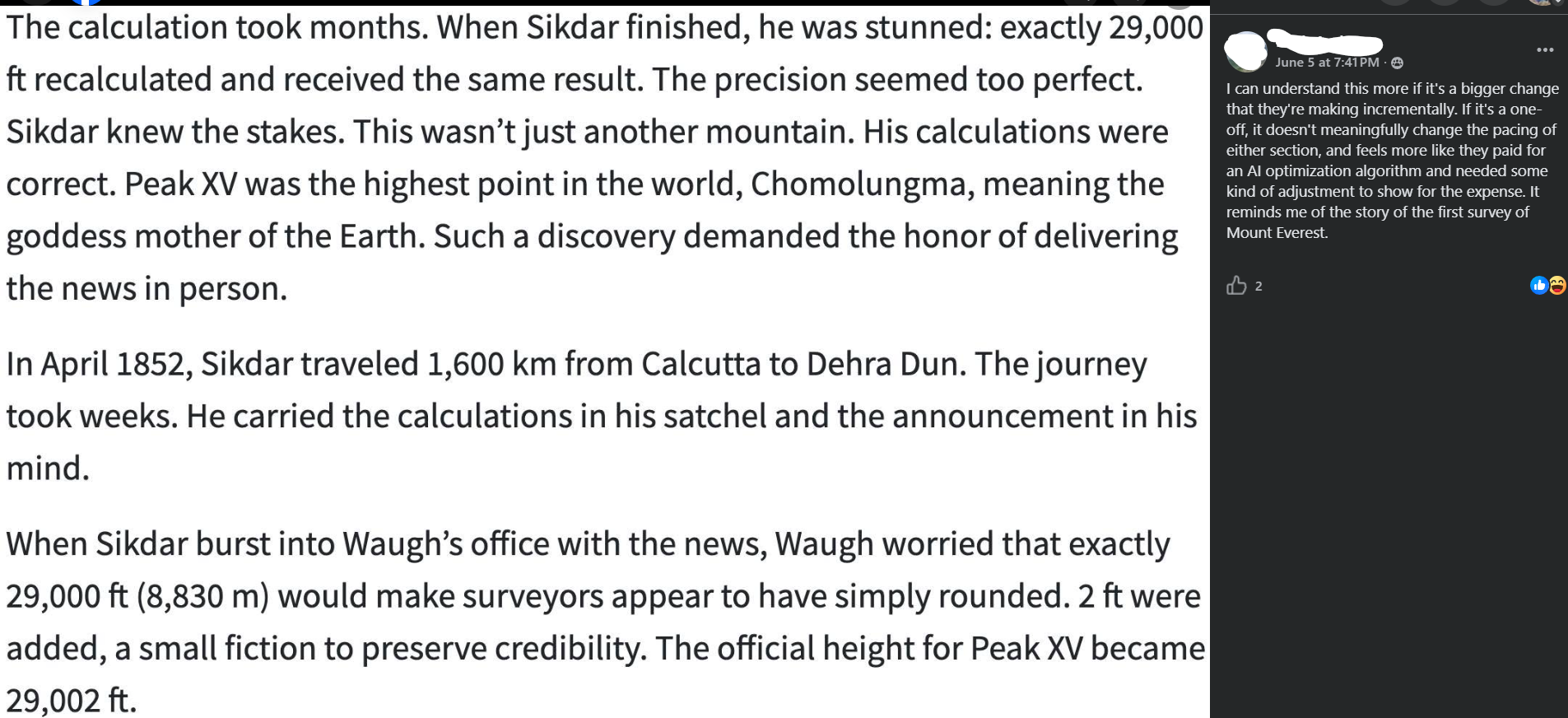
Naturally, many AP Calculus did what they normally do when they want to discuss hot topics like this: they went to Facebook to hash it out, share their opinions and worries, and state their predictions for future changes. Some comments were humorous, some got a bit heated, and one person shared an interesting Mount Everest story that they said was similar to this slight tweaking of the number of MCQ. I thought it was interesting to read, so here it is:
I will be paying very close attention for any other talk of more changes to come. For now at least, the FRQ (free response questions) section has remained untouched.