The 2026 AP Calculus FRQ’s are Here!+ post-exam stuff
WE DID IT! We made it to the AP Calculus BC exam, and we somehow managed to get all the content in before the exam. To be clear, Polar was rushed and we did not cover it as thoroughly as I would have liked, but the students got the exposure and practice they needed to have a chance at the polar questions. I posted links to all the AP Daily Polar videos, posted an optional Polar and Parametric take-home test with answer key included, and gave them an optional Polar circuit. Then it was up to the students to decide how much extra work they wanted to put in to mastering the concepts more.
I had a feeling CollegeBoard was going to make FRQ #2 a Polar question rather than a Parametric question. CollegeBoard had given a Parametric question for FRQ #2 every year since Covid, and they were mostly very straightforward. The 2022 FRQ was downright basic. That continued up until last year, when they unleashed a Polar question. My students that year were not too pleased. However, I think this year’s Polar question was a bit easier, as long as students connected the dots to apply average value and critical point processes to polar equations.
Here are links to PDFs of the questions:
And here is a PDF of my solutions:
I found it interesting that for several of the FRQs, CollegeBoard brought back the use of ‘i’ and ‘ii’ to have sub-questions under the parts ‘a’ through ‘d.’ I hadn’t seen that in many years. Here are a few other interesting things I noticed as I did out my answer key:
For FRQ #1, the table question, part ‘a’ was the usual approximation of an instantaneous ROC, but this time they specifically told students to use the average rate of change over the interval to estimate. I don’t remember seeing this hint before.
AB’s volume question finally brought back revolving about a vertical line: the y-axis. Typically, students only have to revolve about a horizontal line and find a volume by cross-section where the slices are perpendicular to the x-axis. This means that previously, students rarely had to write the function in terms of ‘y’ and make the integral run from a ‘y’ value to a ‘y’ value. I’m glad they brought this back!
The Differential Equation FRQ #3 was very similar to the FRQ on the 2026 released practice exam. This time, though, students were just given the second derivative and didn’t have to find it using the chain rule (implicit differentiation). This was a skill I practice a LOT with my students because they kept forgetting about the chain rule! I’m sure this was a widespread error students were making, so CollegeBoard decided to just give the second derivative and go from there with the question.
I thought the BC volume question, FRQ #5, was very fair without any surprises, and had a nice incorporation of arc length and an improper integral.
The Series FRQ #6 did not include convergence testing or interval of convergence, it was all building series, and I loved it! I especially enjoyed part ‘d,’ which had two sub-parts, and I really hope my students did well on this one since we practiced the series manipulations a lot in class.
While the students were taking the exam, I began the process of cleaning out my room a bit. This usually involves throwing away all of the extra copies of worksheets and ½ sheets that have been in my absent bin as well as getting rid of any handouts I had copied to use in class, but unfortunately never got to use in class due to time constraints. I also got rid of all of the Deriver’s Licenses quiz sheets that I had been saving, both the ‘successes’ and the revised quizzes that students had not passed yet. I had a VERY thick hanging file full of these for all my students!
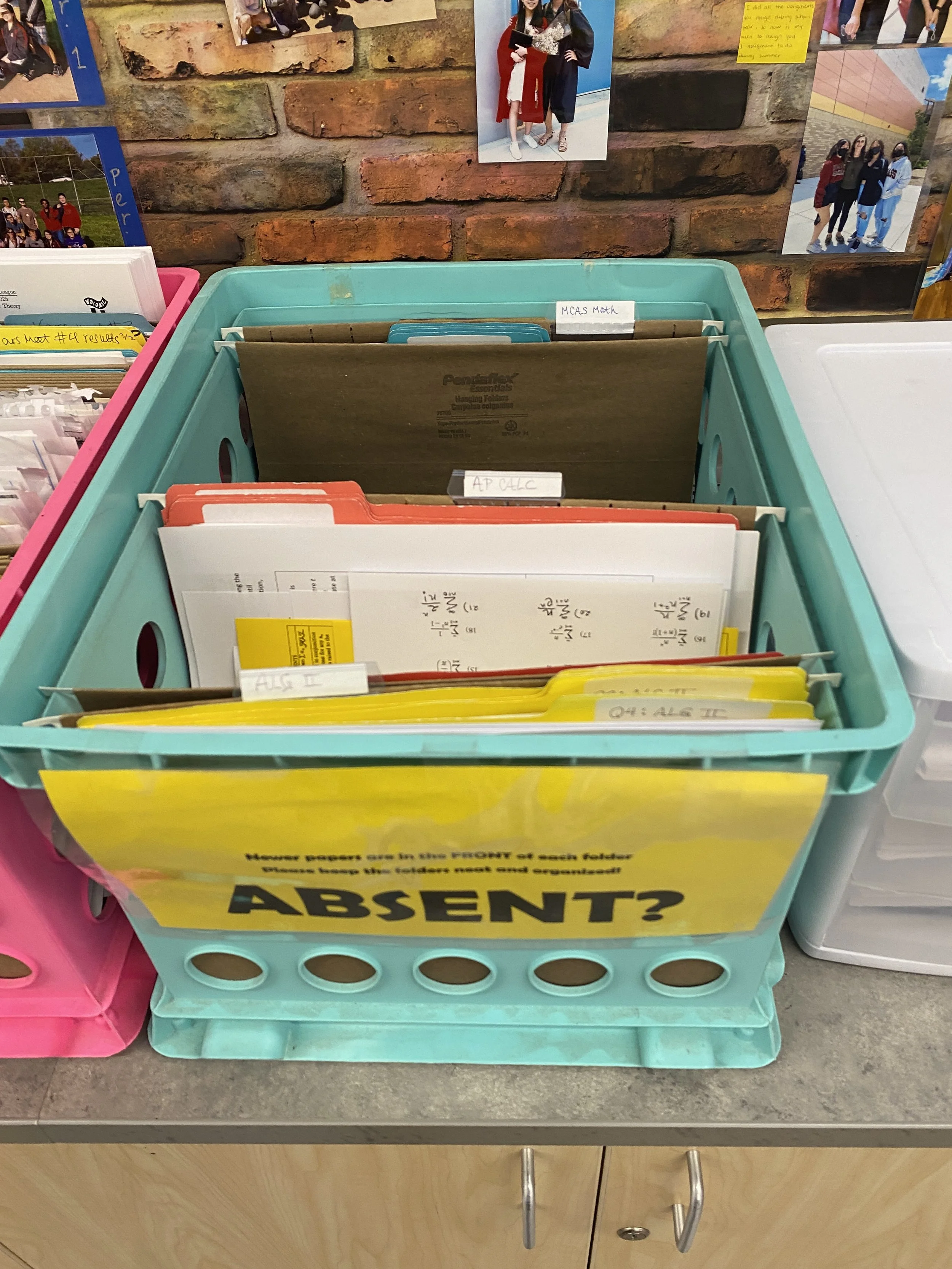
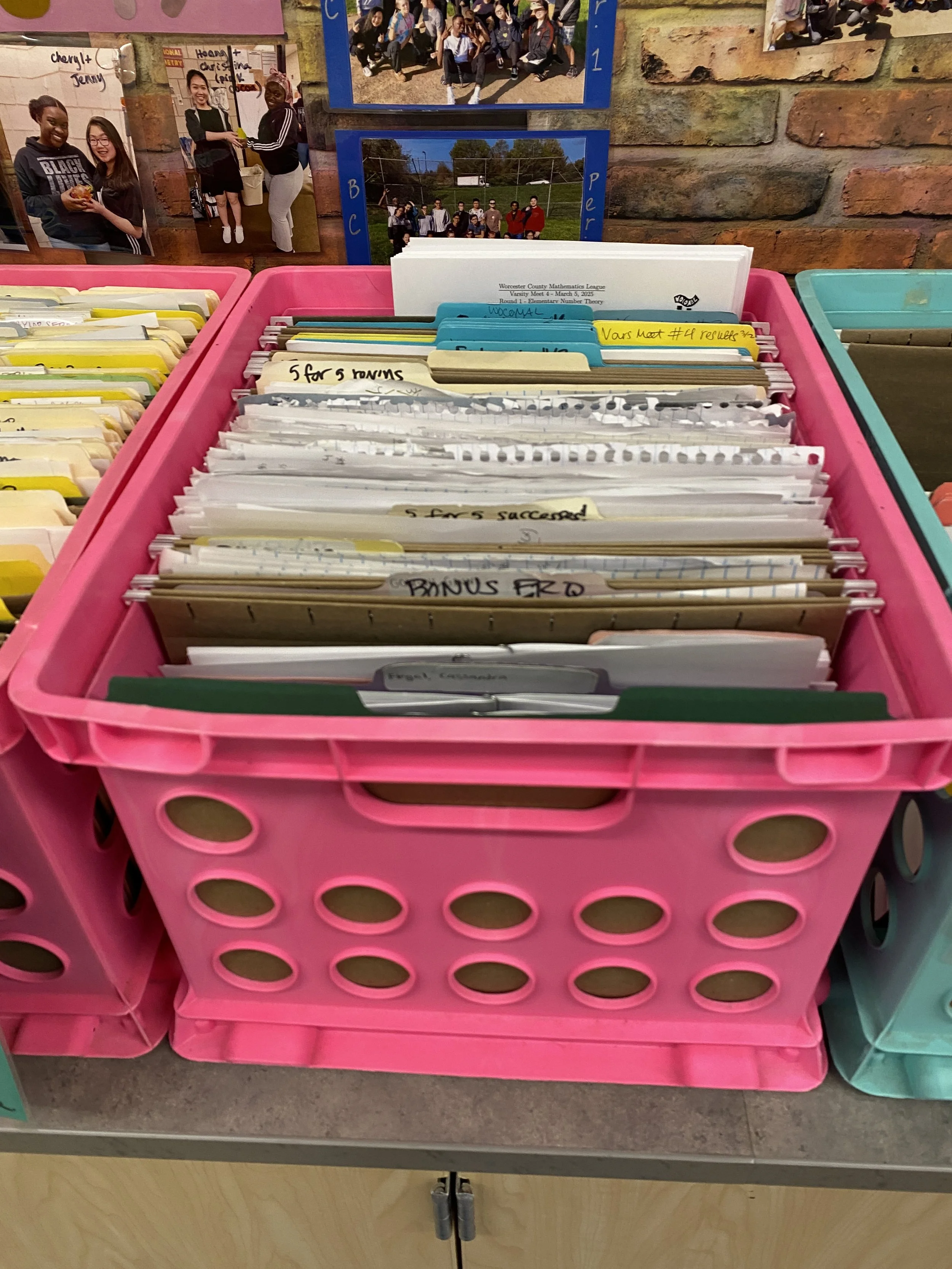
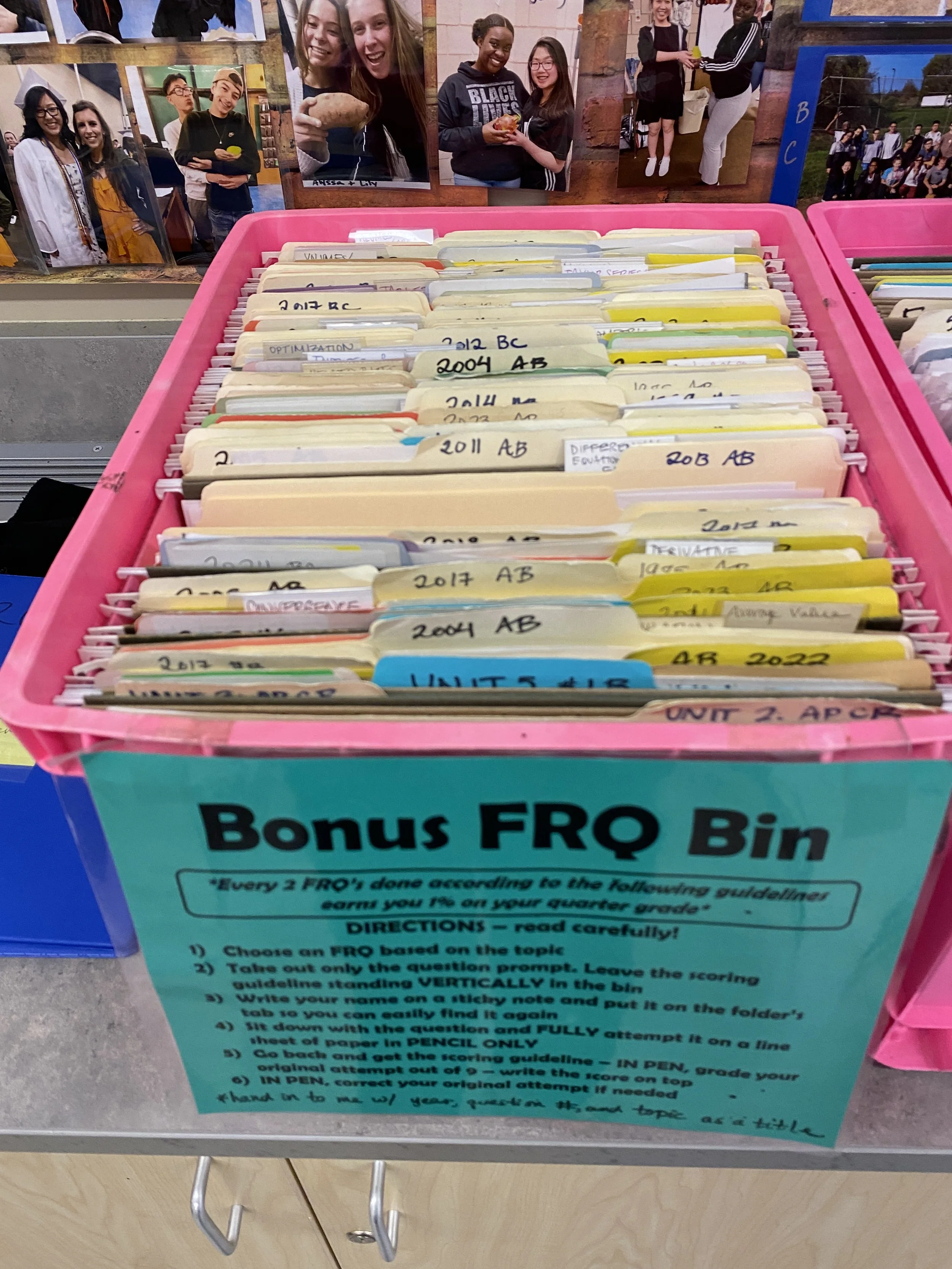
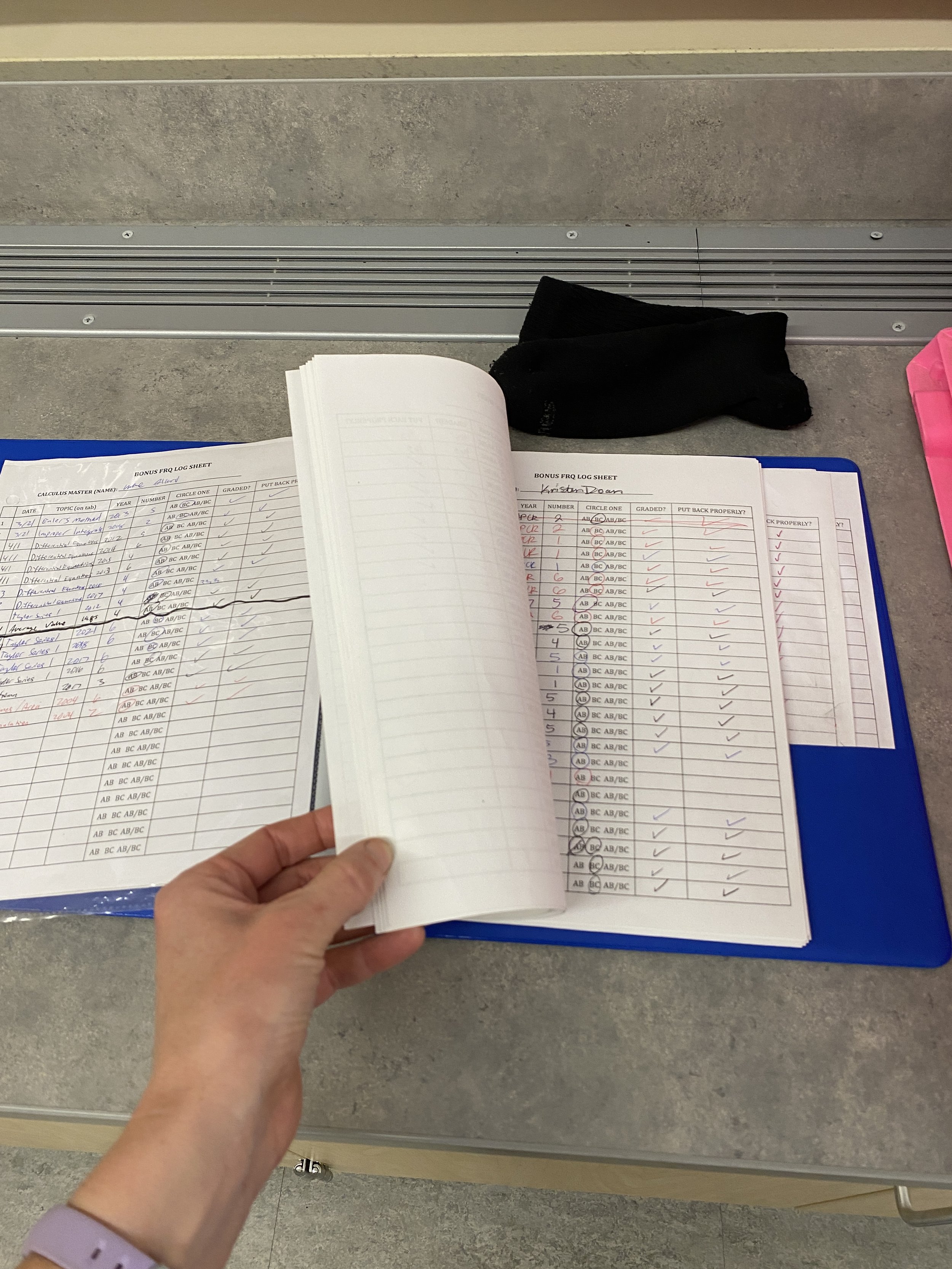
I began combing through my bonus FRQ bin as well; this is something I have to do at the end of every school year since students inevitably end up filing questions or answer keys incorrectly, which would confuse next year’s students. I also always add in the new set of FRQ questions with the answers to keep my collection growing and up-to-date. Then I threw away all of this year’s student recording sheets in the binder where I store these.
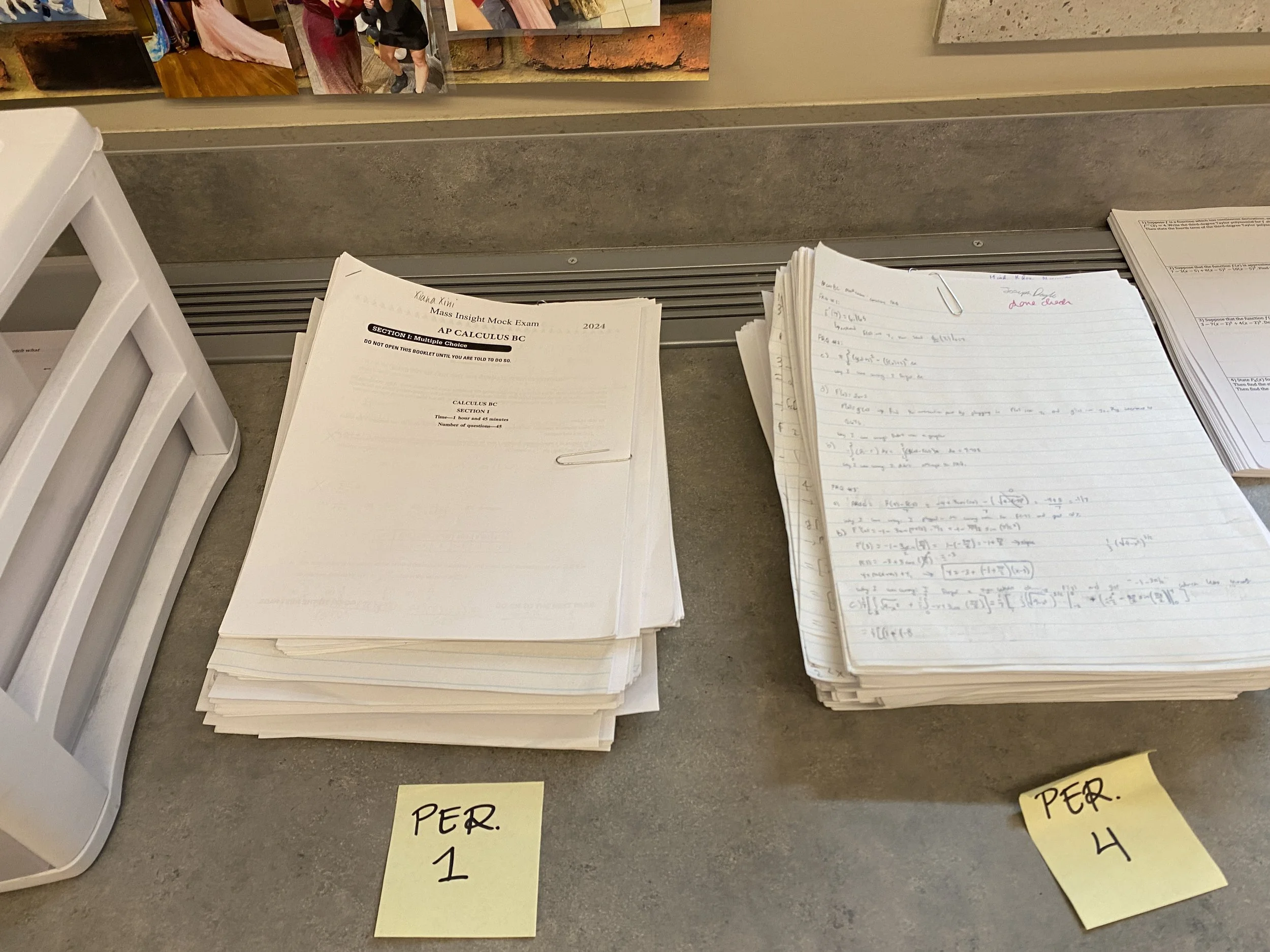
The last thing I did to keep myself busy and put my nervous energy to use was go through the students’ Mock exams, check the corrections of those who chose to complete corrections, and then add 10% to their original Mock exam score on Google Classroom.
Soon I’ll begin the process of getting ready for next year’s AP Calculus classes, which sounds crazy! BUT I always need to have the Google Classroom’s ready since this goes hand-in-hand with the summer work. I also want to try to use my new free time to remake some videos before the summer begins so that I don’t have to record them in the middle of the school year when I’m so short on extra time.