Amplify Desmos Fellows Orientation: 2026
I’m on my way home from the Amplify Fellows (formerly Desmos Fellows) Orientation for Cohort 8, held in Jacksonville, FL. What a great weekend of connecting with other amazing math teachers, learning new skills and ideas, and hearing about updates to Desmos Studio and the ADM (Amplify Desmos Math) curriculum. Two years ago, I went to my Cohort 6 orientation in Denver, CO as a new Fellow (see BLOG POST 1 and BLOG POST 2 and BLOG POST 3 about my experience). I was part of the last cohort known as “Desmos Classroom Fellows.” This program is now known as “Amplify Classroom Fellows.”
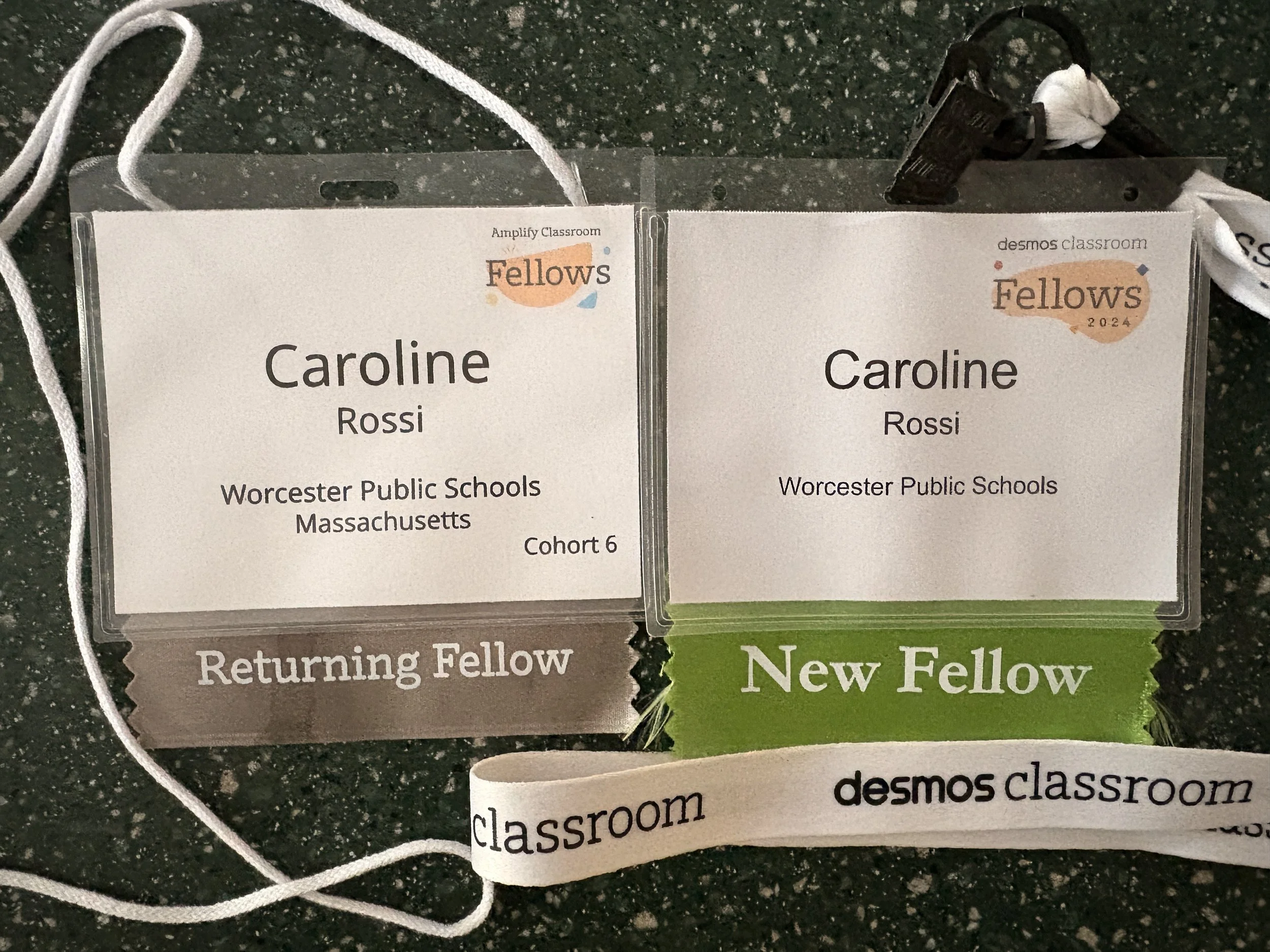
This year, I attended as a returning Fellow, and it really was a different experience. I was not as nervous or shy, and it was easier to meet new people since I had already established connections with people in my Cohort who were also there as returning Fellows.
My flight was pretty early out of Boston, so I had to leave my house at 4:30am, but that meant I had zero traffic on my way into the city. The fact that the event was on the East Coast made it easier for me to attend, since I didn’t have to switch time zones.
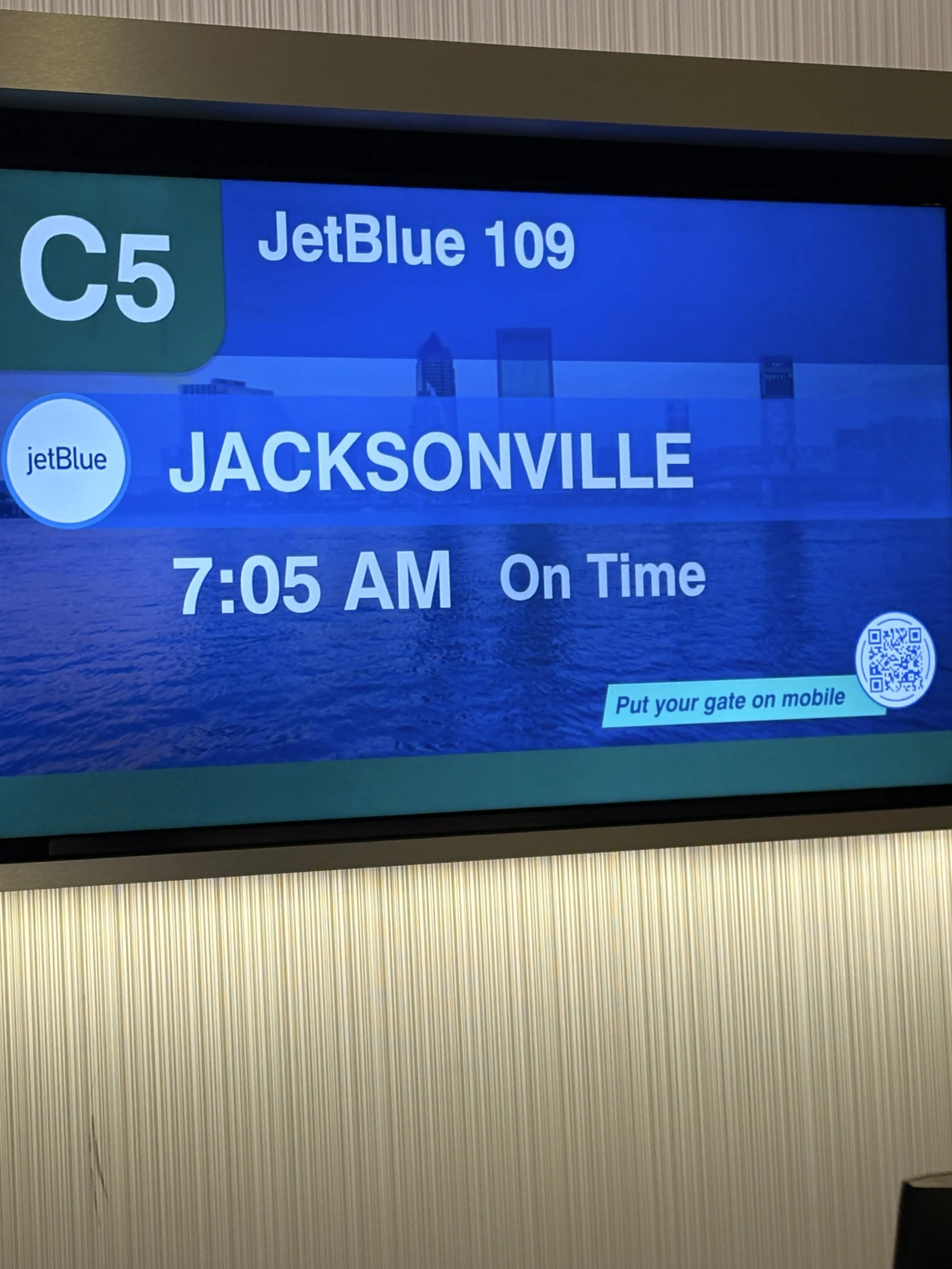
The flight ended up being very entertaining - I had the window seat, and next to me was a man that liked to talk, so we were chatting for a bit about random stuff, and then I looked over at the woman next to him, and she had her laptop out to a DESMOS WEBPAGE! She was editing an activity, but had headphone on. Not one to be deterred by headphones, I leaned over and tapped her shoulder to ask if she was going to the Desmos Fellows event, which she clearly was. She was an employee of Amplify who was working on new Amplify Science curriculum, and she was so fun to talk to. The three of us talked and joked and the rest of the flight flew by. I caught an Uber to the hotel with my new Amplify friend, a new Fellow on our plane that I had met at the gate, and another returning Fellow who was actually my pod leader during my own orientation weekend in Denver. It felt great to meet up with other attendees before the event and go in already knowing some people.
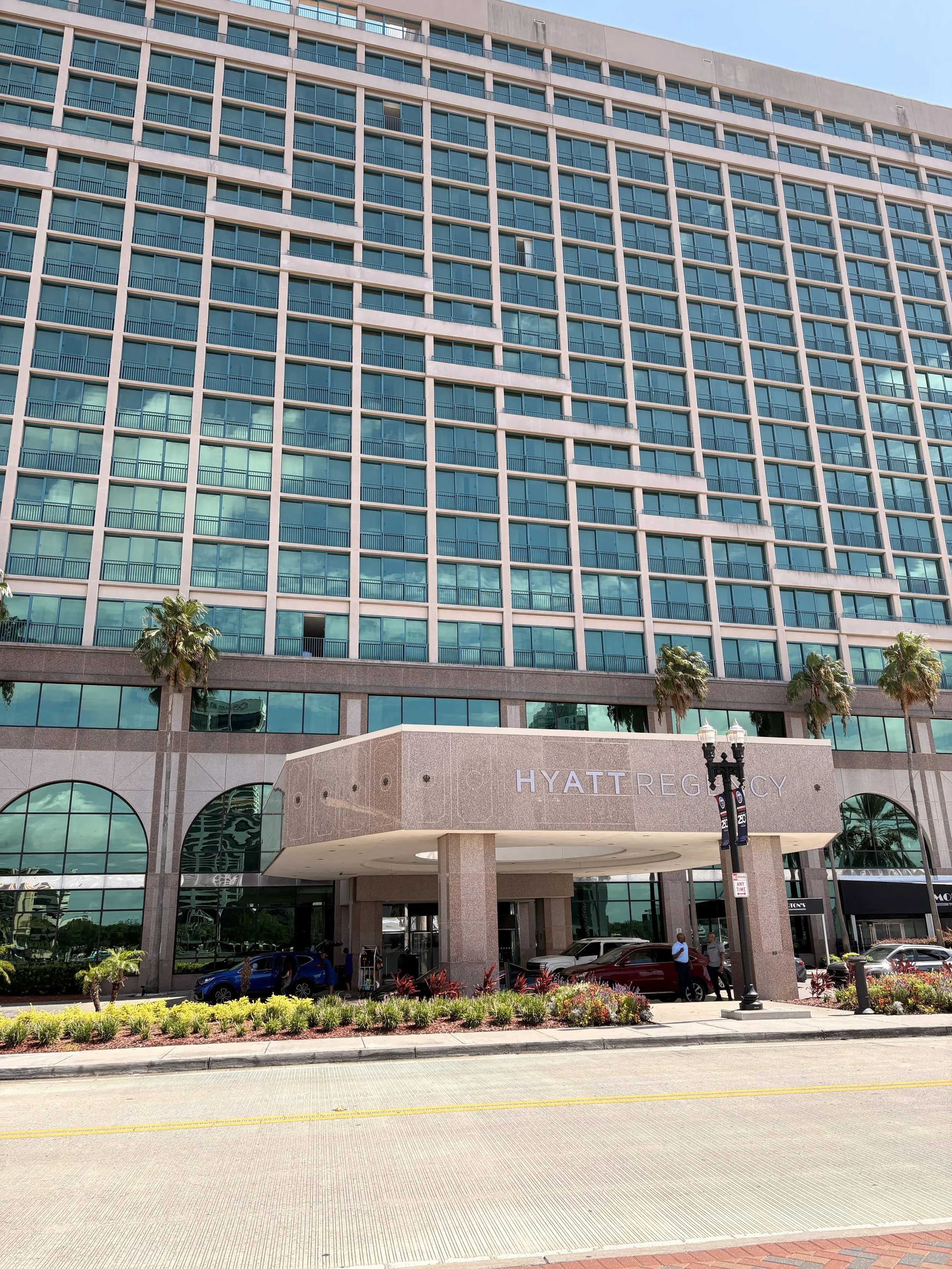
The orientation was held at the Hyatt Regency hotel right in the middle of Jacksonville on the river.
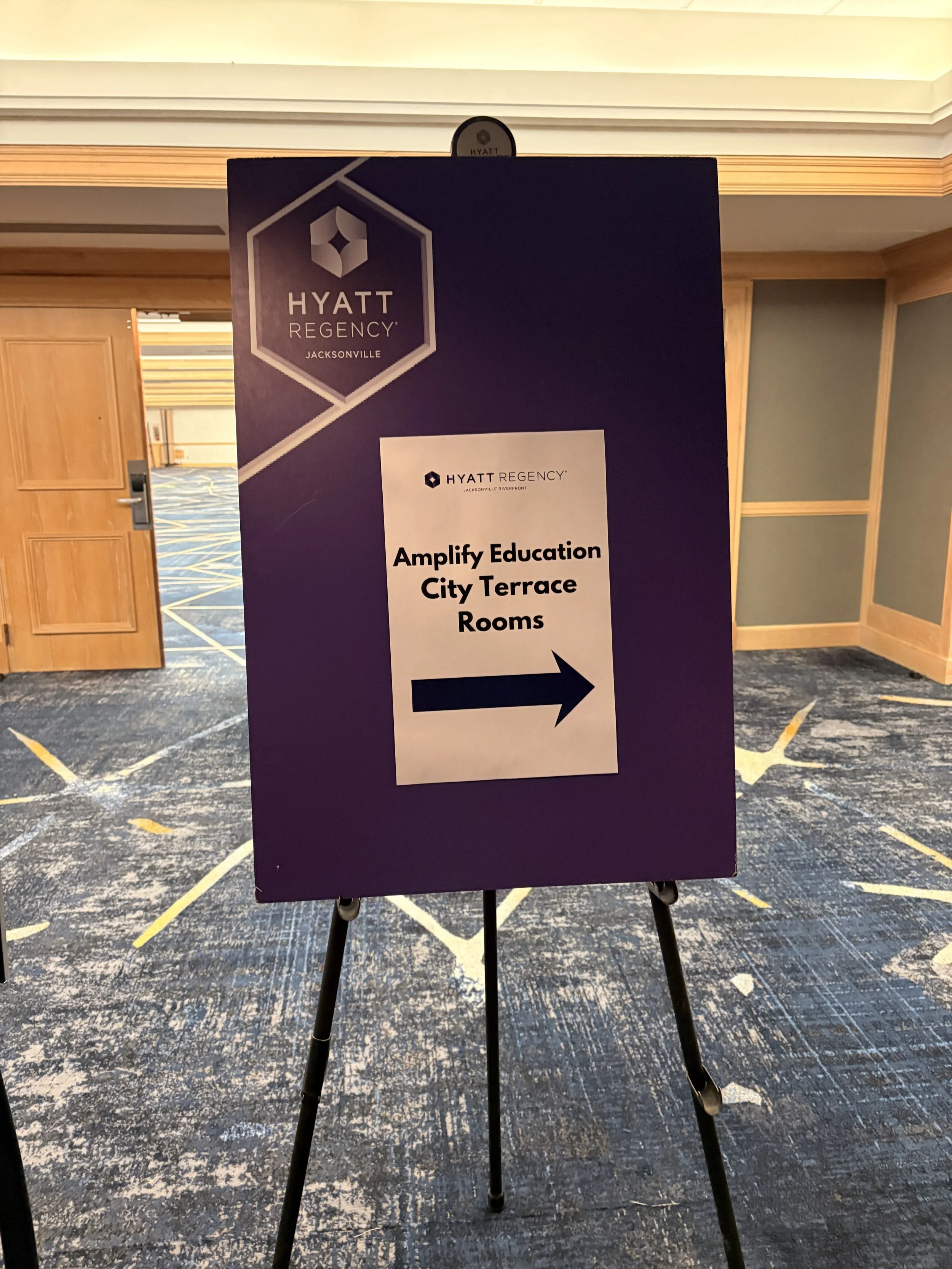
All events were held in the third floor function rooms:
As soon as I checked in, I received some Amplify swag: a Fellows T-Shirt and a water bottle:
It was too early to check into my room, so I got ready in the hotel lobby bathroom, which is exactly what happened two years ago too!
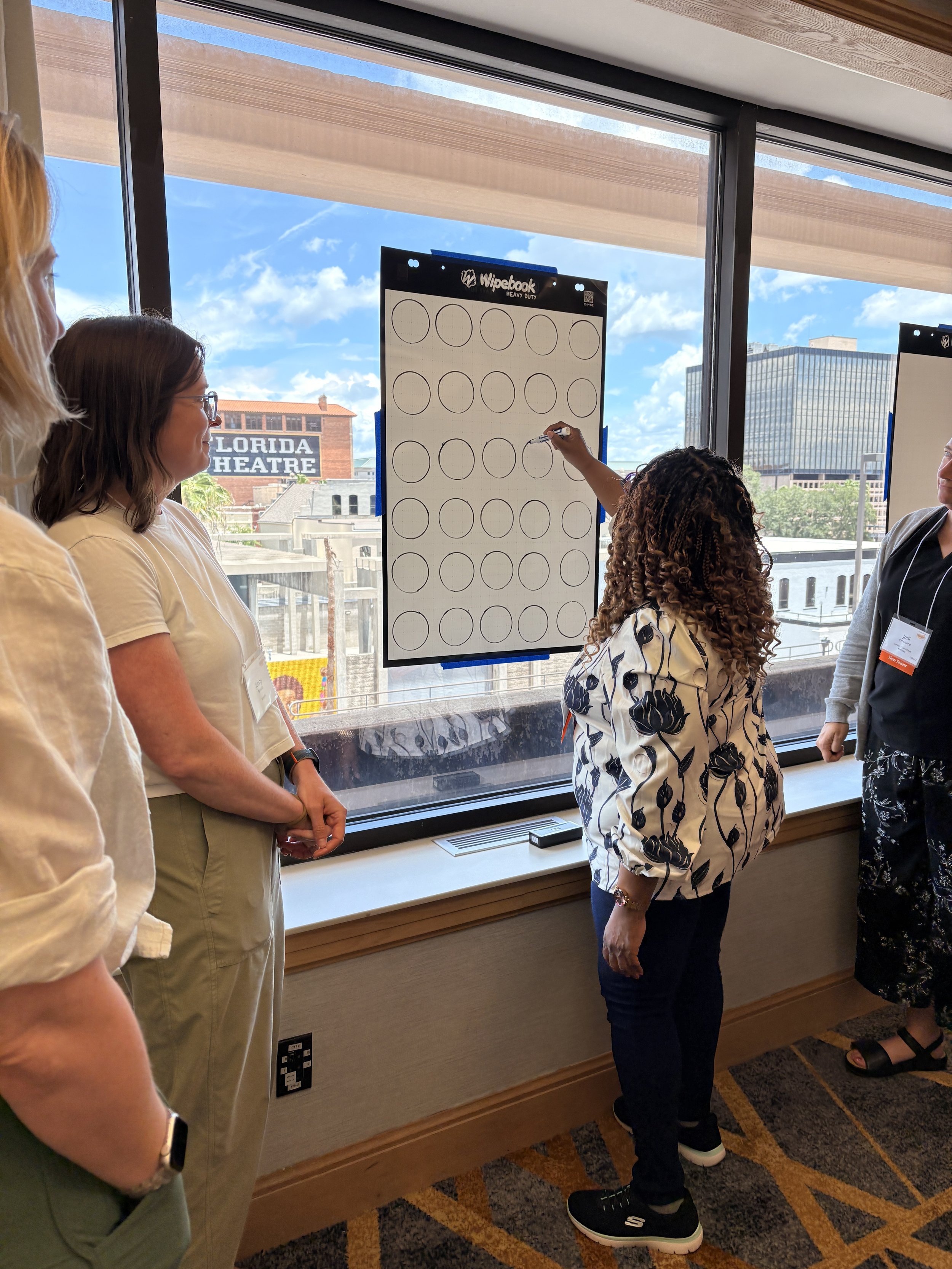
The event started off with lunch, which is always a great way to kick off PD. I was happy to catch up with the five other returning Fellows from my cohort, all of whom were still teaching. After a welcome, we did an icebreaker called the '“30 Circles Challenge,” where we worked with our table pod to turn 30 circles into a recognizable object, passing the marker after every circle. We had four minutes. We didn’t end up filling all of ours in, but it was a cute way to get people interacting and literally break the ice.
We then heard from previous Fellows about their experiences using the Desmos activities or ADM (Amplify Desmos Math) curriculum. One of my favorite sessions followed, which was a talk from Eli Luberoff, the CEO of Desmos, who also spoke at my orientation in 2024.
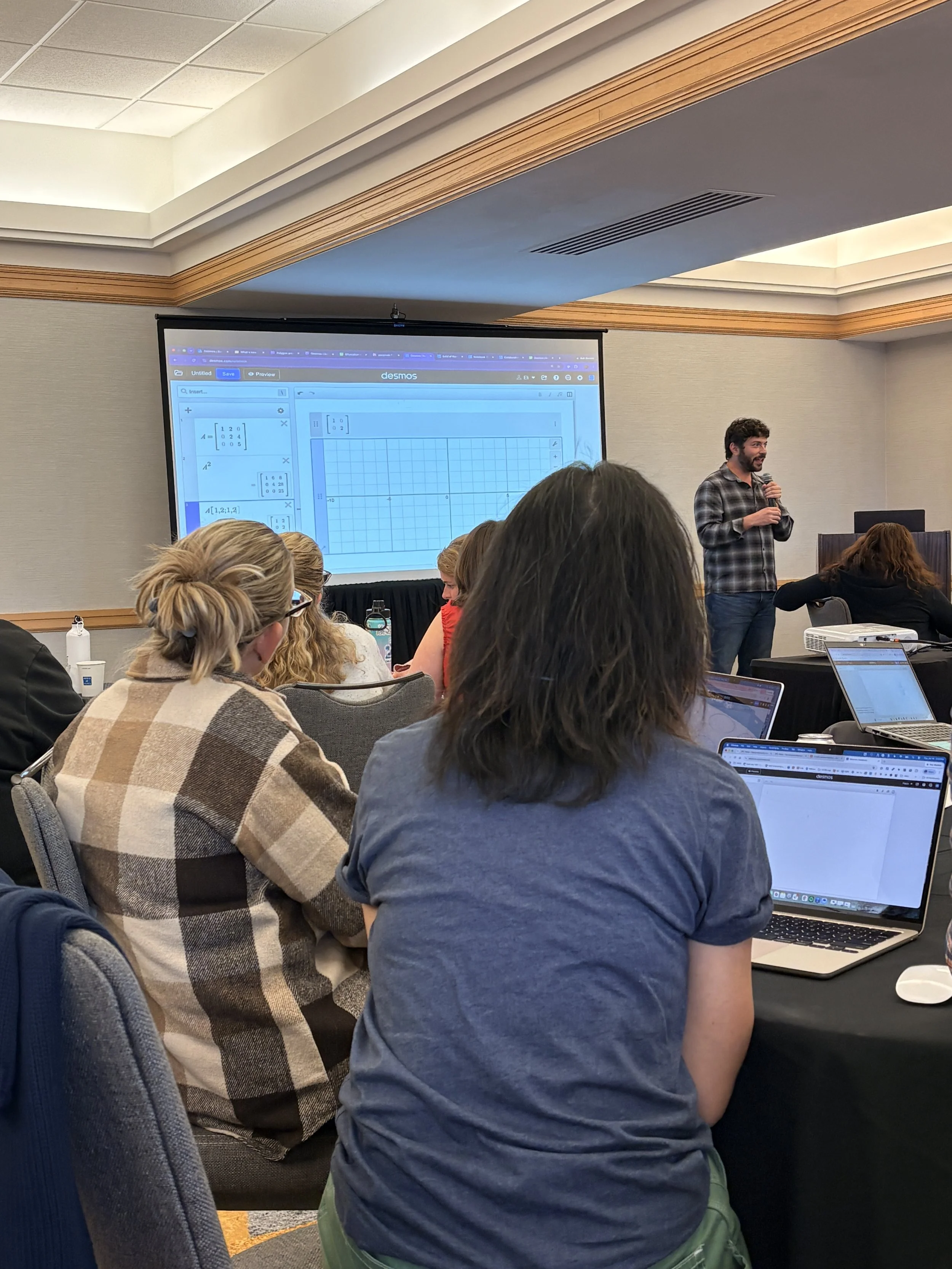
It was really neat to think about how far Desmos Studio has come in just two years. During my orientation, Eli spoke about the new concept of Desmos branching off into two separate but united companies: Desmos Studio graphing calculator and Amplify Desmos Math Curriculum. Since then, ADM curriculum now also includes a science and ELA curriculum, both currently in the works. I remember being confused at first about the decision to break up Desmos into two separate entities, but it now makes sense to me after realizing what an incredible undertaking it is to create a brand-new curriculum that involves digital and print portions.
Back in 2024, Desmos still hadn’t been fully adopted by all 50 states for use on standardized assessments, but now Desmos is officially used in all 5o states, in addition to being used on AP exams, the SAT, and the ACT.
Back in 2024, Eli showed us the tools that had just been released, which included music tools (tone) and Polypad (virtual manipulatives). He also showed us how to do recursion on Desmos and gave us a sneak peak of a still unreleased (back then) feature: imaginary numbers! I remember being very excited about this.
Now all of the above are well-established on Desmos. The big new features Eli spoke about were Desmos Notebook, which I BLOGGED about in May, and Desmos Professional, which is a paid feature. It allows companies or groups to securely and privately collaborate using Desmos Notebook. He also gave us a preview of a soon-to-be-released feature/math tool that has been highly requested.
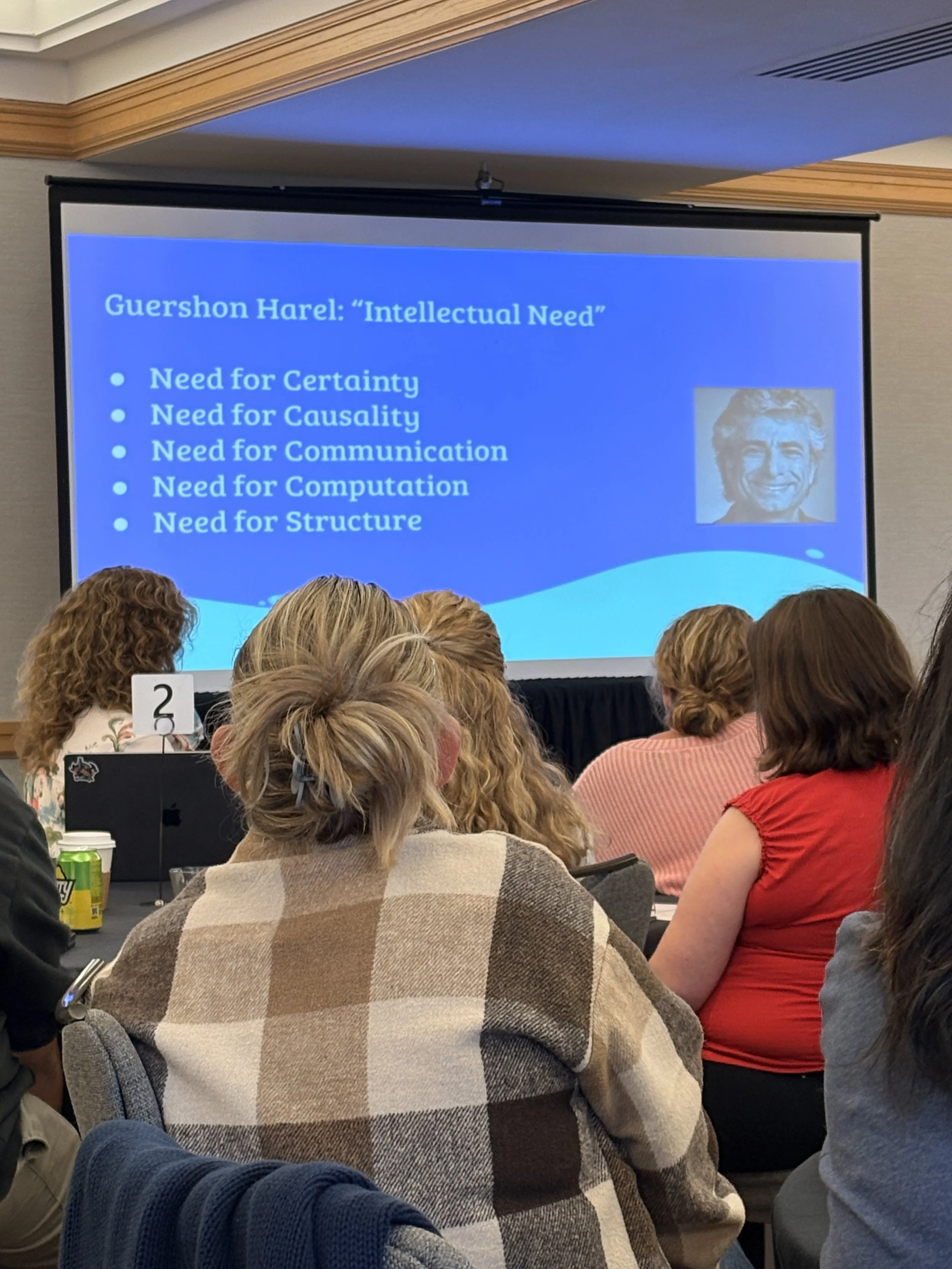
One of my favorite things that he talked about was the complete infiltration of AI in education. Two years ago, AI was a relatively new concept (at least to the general population), but now, AI is everywhere and used by nearly everyone with access to technology. He pointed out that teachers can no longer make students think, since students can just use AI to complete tasks or homework. However, by tapping into students’ intellectual needs, which are the same needs of all humans, we can get them to think strictly by their own need for structure, computation, and communication. This was a neat way of addressing the AI issue in classrooms:
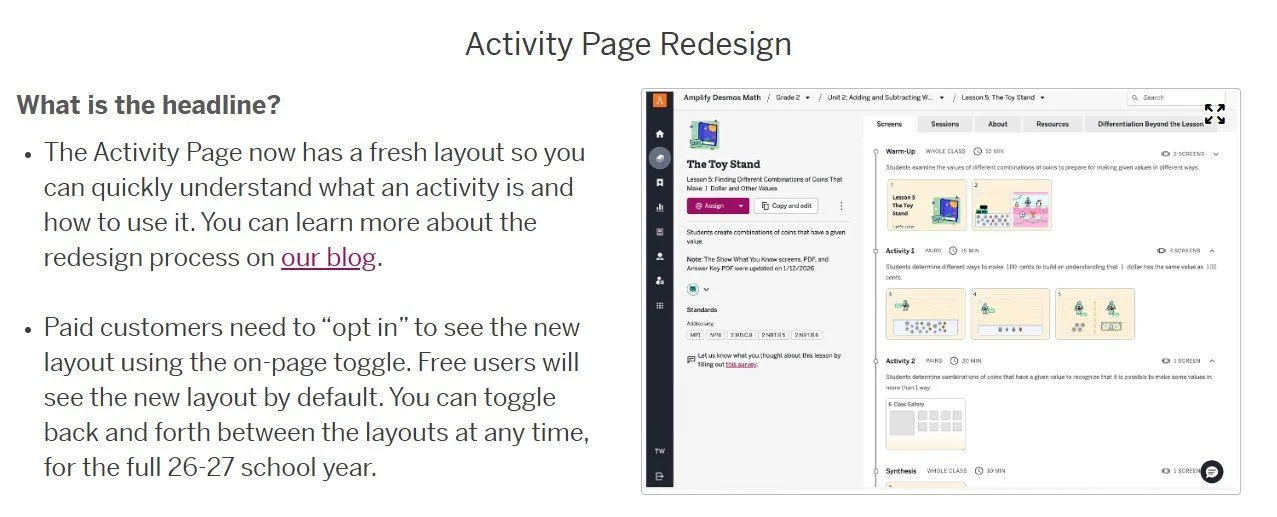
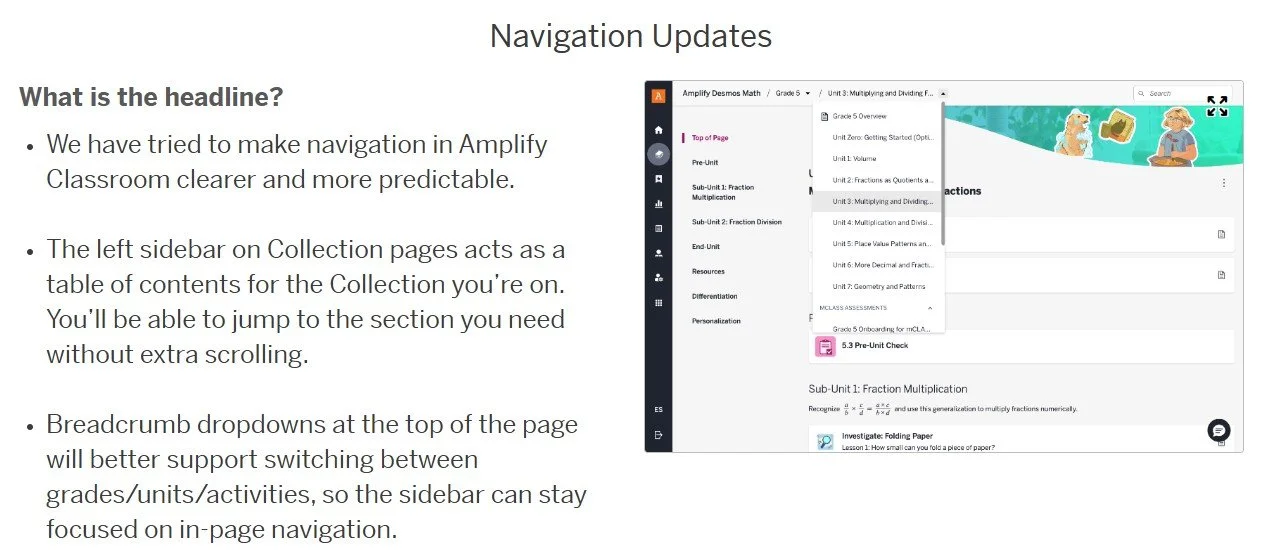
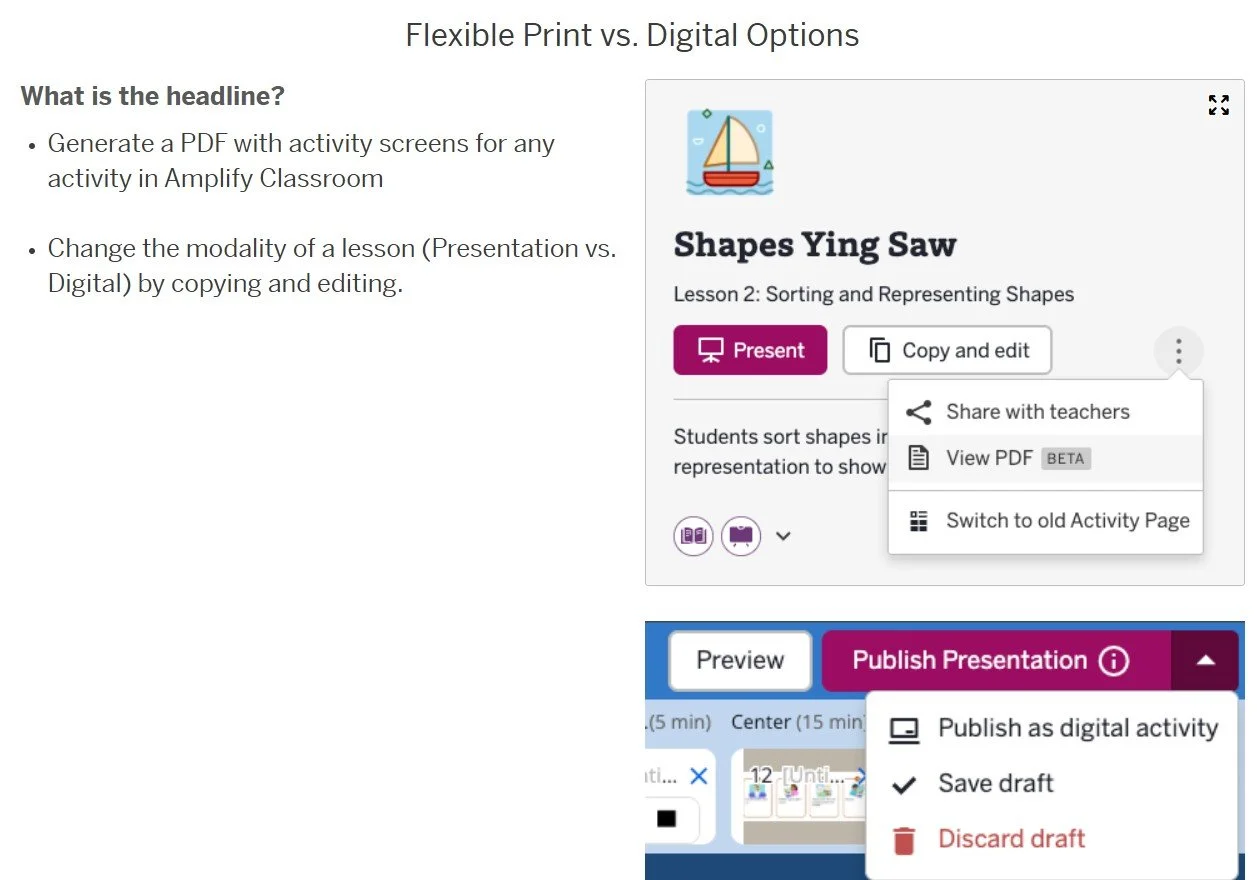
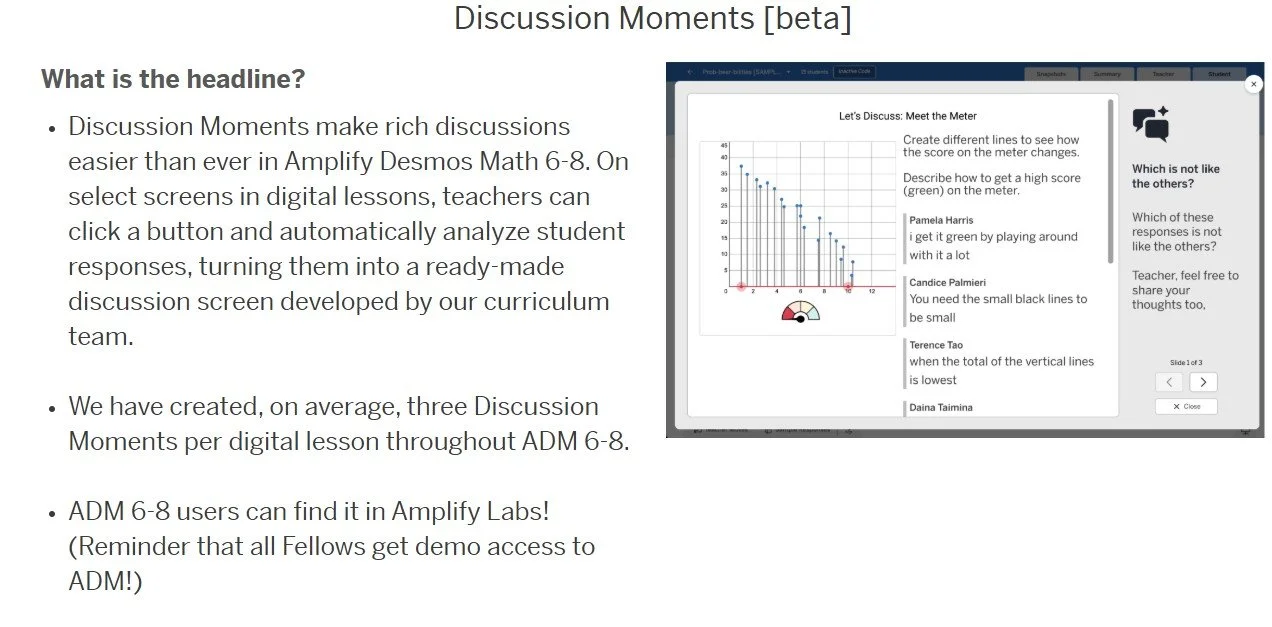
We then heard from Amplify employees about the new ADM releases, which include a new homepage, a new activity page redesign, a change in the teacher presentation screen, and AI-generated discussion moments.
HERE is a blog post (from June 2026) written by Amplify staff that clearly explains the rationale behind the renovated activity page. I hadn’t explored the new layout much since school had basically ended when it went live, but I had time during the session to look around the updated ADM site and I do like the new, cleaner formatting. Here are four slides highlighting the recent updates:
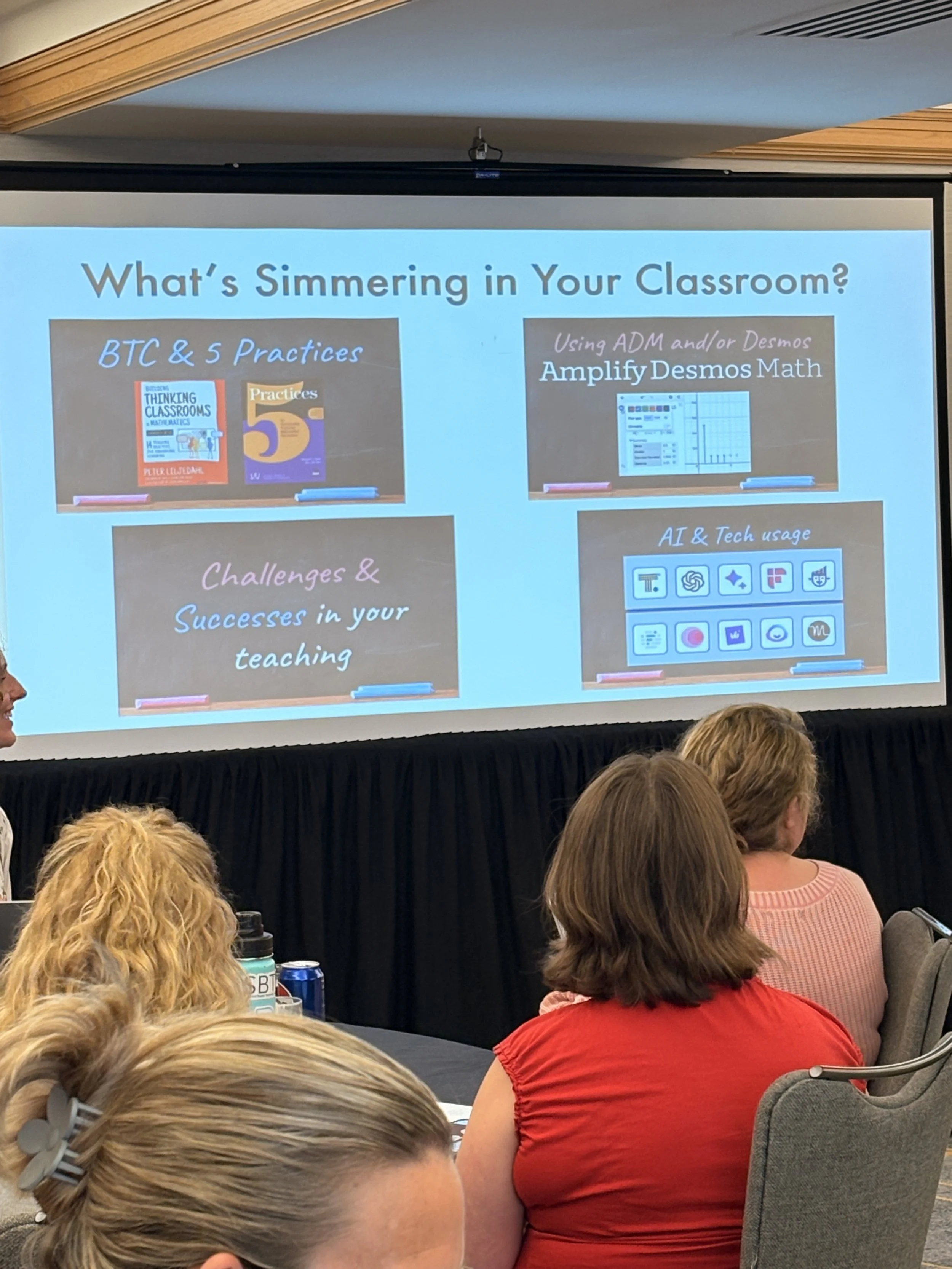
We heard from the wonderful Fawn Nguyen, whom I briefly met at my own orientation. She presented then too and I always get so much out of her thoughtful talks. She reminded us that as math teachers, we are not the answer key! We should never just tell students the answers or tell them if their answer is right without having them first discuss with peers. After giving us time to work on a task at the vertical WipeBooks, she let us break off into different discussion groups based on our interests. I chose the Building Thinking Classrooms group since I am always looking for more ways to improve my skills in this:
After a closing session and dinner, we played trivia (using a Desmos activity, of course!) in our table pods. My team came in last place, but hey, we REALLY TRIED! and I think we had the most fun :)
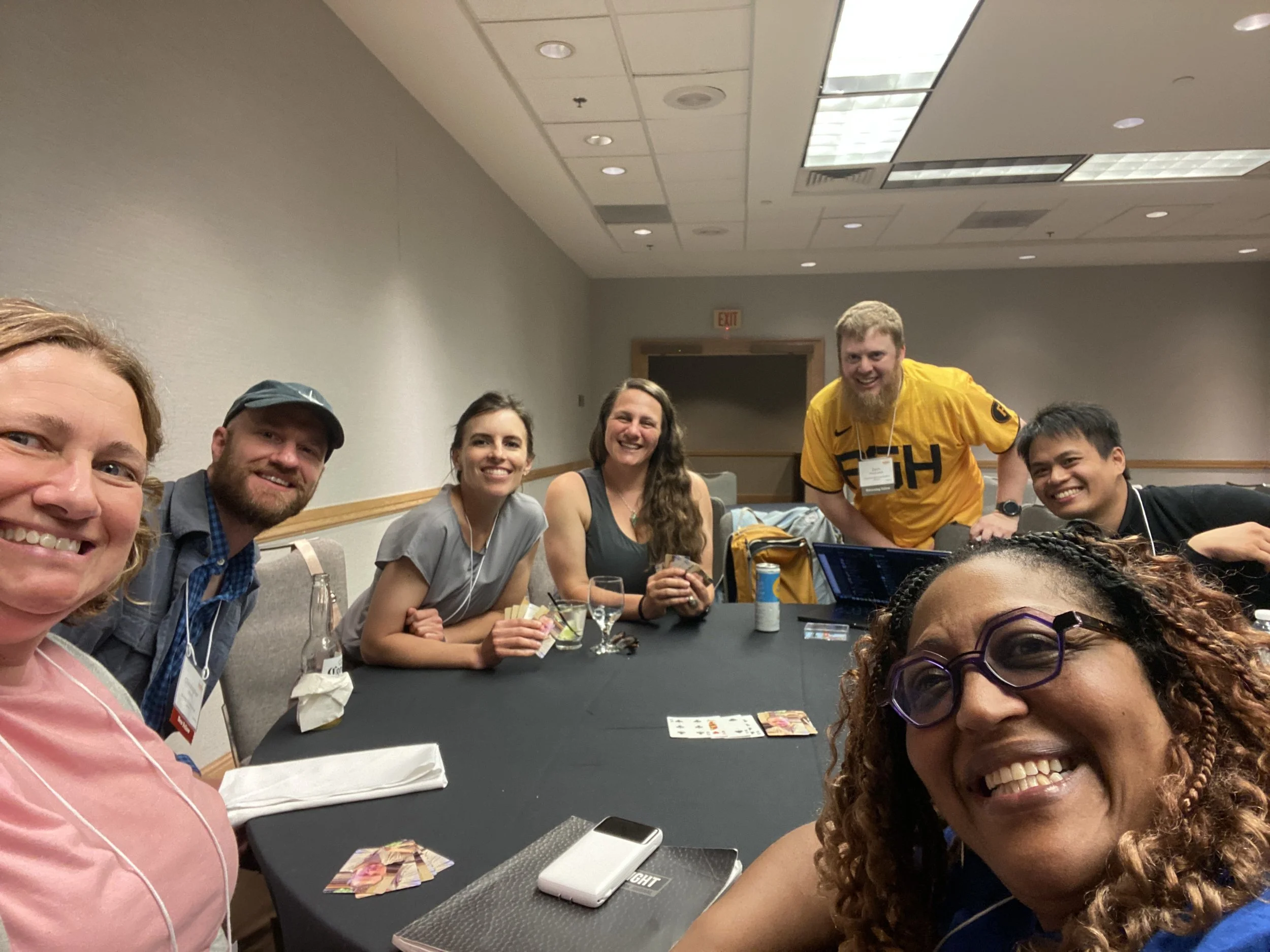
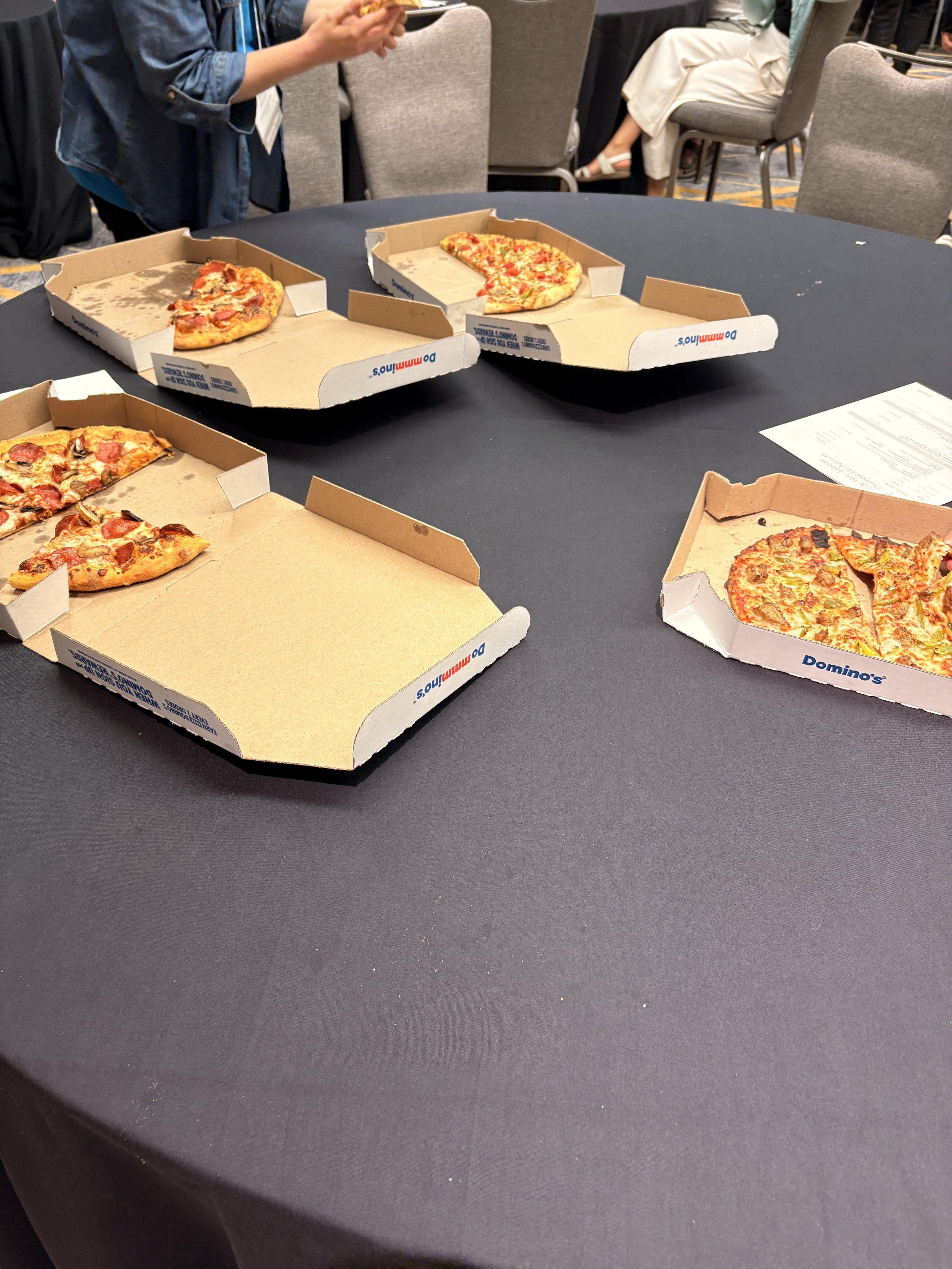
One of the best parts about being surrounded by math nerds is that basically everyone there loves playing board games and card games. One returning Fellow from my cohort is famous for the huge bag of board games he brings to these orientations, and he now is the unofficial (or official?) leader of ice-breakers. My table ended up playing gin rummy and ordering Dominos pizza at 10:30. Normally I hate Dominos, but it sure tasted good right before bed!

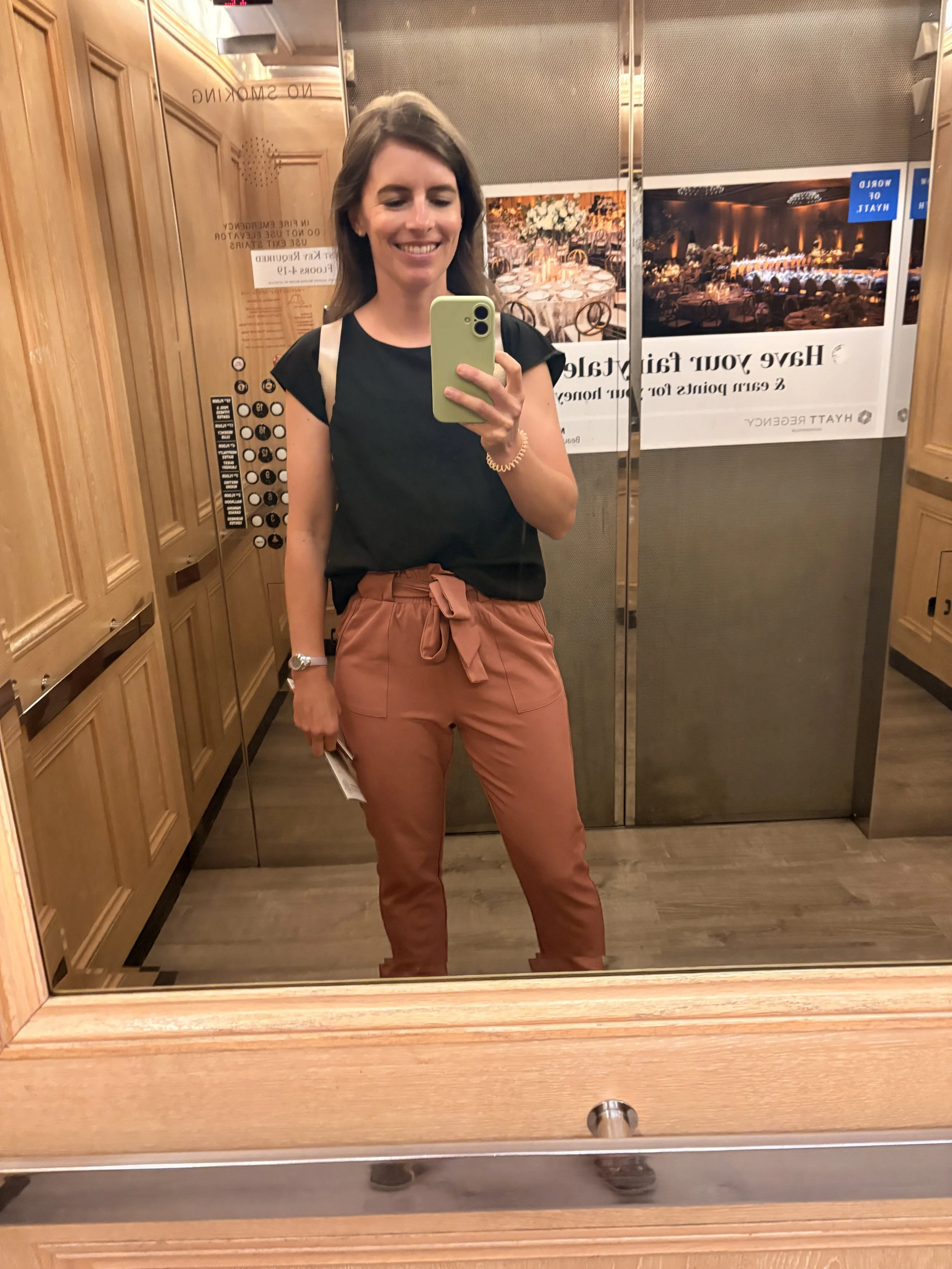
Day 2 of orientation was a full day that began with breakfast. Here I am heading to our first session:
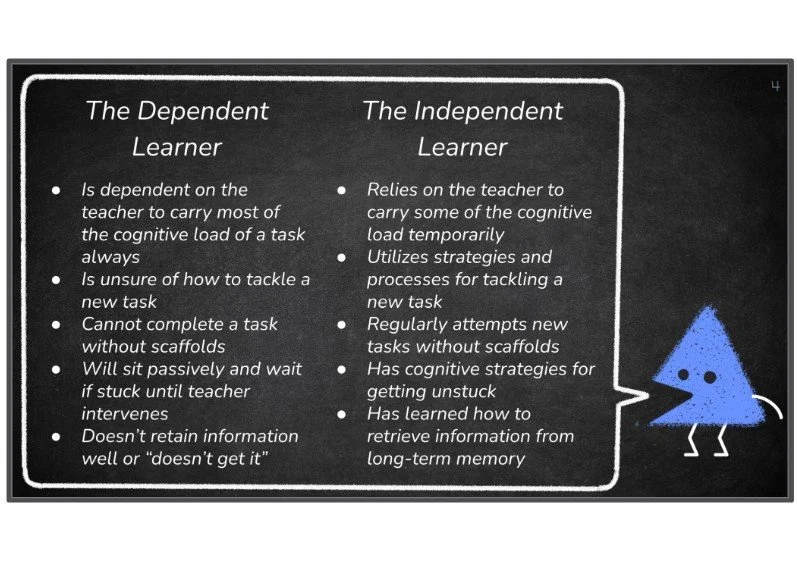
We started off with a session from a Cohort 5 returning Fellow, who led an excellent presentation on his experience with ADM in his classroom and his experience as a Desmos Fellow. My favorite part of his session was when he talked about how ADM allowed him to build independent learners, rather than dependent learners. He displayed this info-graphic which I am planning on incorporating in my class this upcoming school year. I blogged about this concept HERE to make sure I don’t forget about it.
Kurt Salisbury was a classroom teacher until Covid, when he was hired by Desmos/Amplify to help create the ADM curriculum. He gave a presentation on how to build great lessons using the Activity Builder and CL (computation Layer). He did a similar presentation at my orientation. The next two sessions were on how to use CL and how to use Animation in the Graphs Components (led by my new friend from the plane ride!). I remember at my orientation, Jay Chow came to teach us about CL and gave us bite-sized Cl challenges to work our way through. I struggled with it then but it felt manageable at least. This year, it was different because we were set free to try to build Desmos slides using CL, but for someone who isn’t confident in that coding language, it felt a bit overwhelming.
The animation session was very fun and easier to implement than CL. It was so cool to play around with the different parameters and see the effects they had on an image imported into the Desmos graphing calculator. This is a big part of how the Amplify Science curriculum is currently being created.
We ended the night by walking to a nearby brewery for dinner, conversation, and more games. I met two teachers whom I wish I had met earlier, because they also taught AP Calculus, and I also learned how to play Rummikub, which is based off of the card game rummy.
Overall, it was an energizing and inspiring couple of days surrounded by amazing math teachers - 10/10 highly recommend!